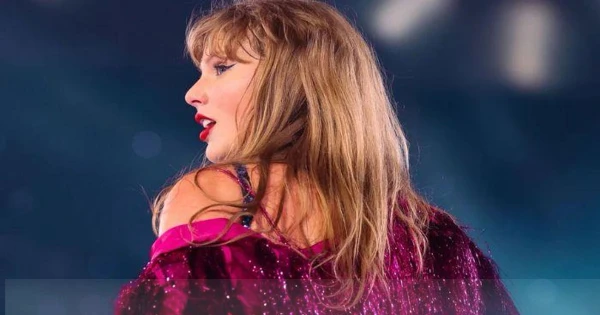
Taylor Swift has secured a decisive legal victory after a federal judge formally dismissed a copyright infringement lawsuit brought forward by poet Kimberly Marasco. The ruling permanently ends the contentious legal battle at the trial court level.
The litigation originated when Marasco alleged that Swift copied specific elements of her original poetry. The claims centered on the premise that these protected phrases were used in Swift's hit songs, including The Man and The Great War.
Marasco subsequently filed an updated complaint in February 2025. This expanded legal action targeted Swift directly, alongside her record label, Republic Records, and the parent company, Universal Music Group.

Judge Aileen Cannon ultimately ruled to dismiss the lawsuit with prejudice. This specific legal designation means the case is permanently closed and cannot be refiled or brought back into the court system.
In the official court decision, the judge clarified the reasoning behind the dismissal. The ruling emphasized that any perceived similarities between the songs and the poems involved only common ideas and phrases.
Under established United States copyright law, standard phrases and generalized concepts are not protected. The judge noted that Marasco failed to identify any specific, highly creative expression that was unlawfully copied.
Legal representatives for Taylor Swift have maintained strict silence regarding the recent court decision. They had previously argued that the plaintiff’s claims lacked a proper legal basis and asked the court for a rejection.
Marasco has publicly expressed strong disagreement with the judicial ruling. She has stated her intention to appeal the decision, aiming to bring the case before a higher appellate court for further review.
This definitive court victory occurred during a highly significant period in the pop star's personal life. Swift recently married NFL tight end Travis Kelce in a highly publicized ceremony held at Madison Square Garden.
The high-profile couple first began their widely publicized relationship in 2023. Their romance progressed steadily over the following years, eventually leading to a private engagement announcement earlier in 2025.
Copyright infringement cases in the music industry often require plaintiffs to prove substantial similarity. Courts routinely separate unprotected basic ideas from the specific, original expression that copyright law is designed to shield.
When evaluating these complex claims, judges typically look for direct copying of unique creative choices. Because basic literary phrases are freely available for public use, their presence in multiple works does not automatically prove theft.
The music industry continues to see a high volume of intellectual property disputes. However, federal courts frequently dismiss cases where the alleged similarities rely entirely on standard thematic elements rather than actual copied lyrics.
For major recording artists, facing plagiarism accusations has become a somewhat routine legal challenge. Swift has successfully navigated similar intellectual property claims in the past, maintaining the originality of her extensive catalog.
The upcoming appeal process will require Marasco to present new legal arguments to a higher court. Appellate judges will strictly review the lower court’s legal interpretations rather than examining any new factual evidence.
Until the appeal is officially filed and processed, the dismissal with prejudice remains the final word. This ensures that Swift and her affiliated record labels are completely relieved of the immediate legal burden.