The United States has facilitated two distinct agreements in the Middle East aimed at stabilizing the region following recent conflicts. One memorandum with Iran emphasizes respect for sovereignty and includes provisions for the Strait of Hormuz, while a separate framework involving Israel and Lebanon focuses on security arrangements that have raised concerns about Lebanese authority.
These developments highlight differing approaches within the U.S. administration. The Iran-related pact, which supports an end to hostilities and maritime access, contrasts with the Israel-Lebanon framework. The latter encourages Lebanese forces to handle security in southern areas and disarm non-state actors, without equivalent sovereignty assurances for Lebanon.
Lebanese officials have expressed strong reservations. Parliament Speaker Nabih Berri has criticized the deal, warning it could spark internal divisions and vowed to block its implementation. Despite this, Lebanese leaders have engaged in talks, reflecting the country's complex political landscape amid ongoing challenges.

The conflicts have taken a heavy toll. Since late 2023, over a million people in Lebanon have been displaced, with thousands killed in the violence. A fragile ceasefire has taken hold, but tensions persist as efforts continue to establish lasting security.
Israeli Prime Minister Benjamin Netanyahu has welcomed aspects of the agreements, viewing them as a setback for Iranian influence in the area. Israeli forces maintain positions in parts of Lebanon and Syria, describing them as necessary security buffers.
Internal U.S. dynamics have shaped these outcomes. Vice President JD Vance has advocated for restraint and diplomacy to avoid broader escalation, while Secretary of State Marco Rubio has supported firmer measures aligned with Israeli security priorities.
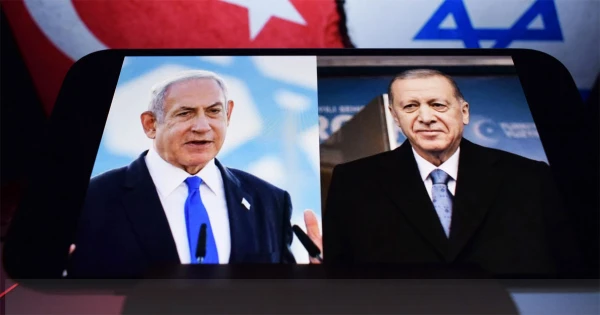
Attention is now turning toward Turkey. Israeli officials increasingly describe Ankara as a growing long-term challenge, pointing to potential alignments involving Turkey, Syria, and Qatar. Some Israeli leaders have referred to an emerging "Sunni axis" that could reshape regional power balances.
Turkey has responded by strengthening its military capabilities. Ankara is advancing naval and air assets, including aircraft carrier development and joint exercises with partners. Turkish leaders emphasize deterrence while maintaining pragmatic ties where possible.
In Syria, Israel has conducted operations to neutralize threats and secured territory following the fall of the Assad regime. These moves aim to limit influence from various actors and create buffer zones. Turkey, with its own interests in Syria, navigates these changes carefully.
Eastern Mediterranean dynamics add another layer. Tensions over maritime boundaries and energy resources involve Greece, Cyprus, and others, with Israel playing an active role. Turkey continues to assert its positions in these disputes.
The situation remains fluid. While the U.S.-brokered Iran agreement seeks to reopen vital shipping lanes and ease immediate pressures, broader negotiations on nuclear issues and sanctions continue. In Lebanon, implementation of security steps faces political hurdles.
Experts note that Israel's strategy prioritizes preemptive action against perceived threats. This approach, once centered on Iran, now extends to countering potential challenges from Turkey and associated networks. Regional powers are adjusting accordingly, with diplomacy, military modernization, and alliance-building shaping the next phase.
The Middle East stands at a crossroads. Ceasefires provide breathing room, but underlying rivalries and competing visions for security could drive further shifts. Sustained international engagement will be essential to prevent renewed conflict and foster stability across Lebanon, Syria, and beyond.